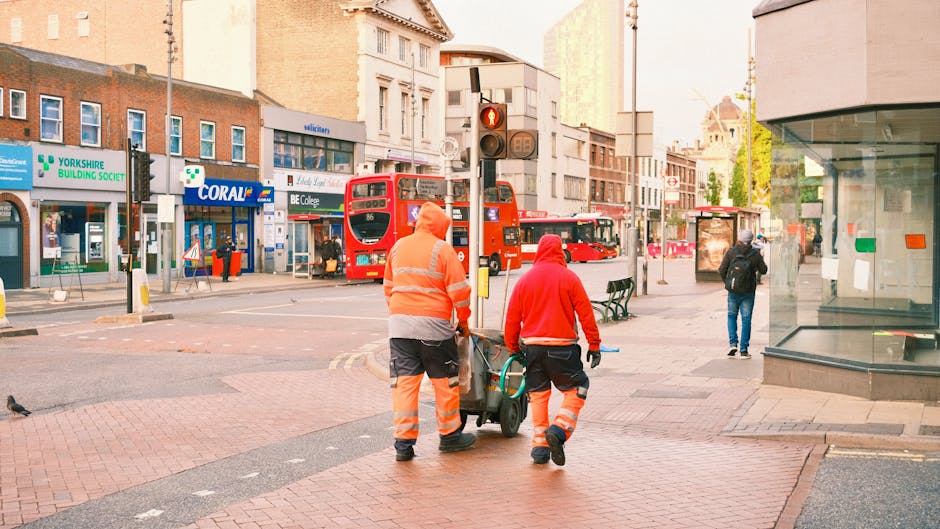
Putney High Street Rubbish Collection Tips for Busy Shops
If you run a busy shop on or near Putney High Street, rubbish has a habit of building up at exactly the wrong time. One delivery lands late, a cardboard mountain appears behind the till, and suddenly the back room looks like it has had a rough night. These Putney high street rubbish collection tips for busy shops are designed to help you keep things moving, stay tidy, and avoid the usual headaches that come with retail waste in a busy London setting.
In practice, good rubbish collection is not just about clearing bags away. It affects first impressions, stockroom space, staff safety, pest control, and how smoothly your day runs. The good news? With a simple system, the whole thing becomes much easier than it sounds. Let's get into what works, what does not, and how to keep waste under control without turning it into another job nobody wants.
Table of Contents
- Why Putney high street rubbish collection tips for busy shops matters
- How Putney high street rubbish collection tips for busy shops works
- Key benefits and practical advantages
- Who this is for and when it makes sense
- Step-by-step guidance
- Expert tips for better results
- Common mistakes to avoid
- Tools, resources and recommendations
- Law, compliance, standards, or best practice
- Options, methods, or comparison table
- Case study or real-world example
- Practical checklist
- Conclusion
- Frequently asked questions
Why Putney high street rubbish collection tips for busy shops Matters
High street shops live and die by flow. Customers need to walk in without dodging bin bags. Staff need enough space to work. Deliveries need a clear route. If waste starts spilling into that flow, the whole place feels smaller, messier, and frankly a bit tired. On a busy stretch like Putney High Street, that matters more than people sometimes admit.
Rubbish also behaves differently in retail than it does at home. You are dealing with packaging from deliveries, food waste if you sell consumables, damaged stock, promotional cardboard, and the odd awkward item that does not fit neatly into a standard bin. One pile can become three before lunch if nobody is watching it.
There is also the customer perception side. Shoppers may never say, "I avoided that shop because of the overflowing bags out back," but they notice. The smell of damp cardboard near the entrance. A bin lid left open. Boxes creeping onto the pavement. It all sends a message. Not a great one.
Practical takeaway: waste management on a high street is part housekeeping, part customer experience, and part risk control. Ignore it, and it has a sneaky way of affecting all three.
How Putney high street rubbish collection tips for busy shops Works
The basic idea is simple: create a predictable system for storing, separating, and removing waste before it becomes a problem. In a busy shop, that usually means planning around trading hours, delivery windows, and local collection logistics. The trick is not "doing waste removal" in the abstract. It is making it fit your actual working day.
A good setup usually follows the same pattern:
- Waste is sorted at source. Cardboard, soft packaging, general rubbish, and recyclable material should be separated straight away where possible.
- Waste is stored in a designated spot. This might be a rear yard, a side access point, or a secure internal holding area. The key word is designated.
- Collection happens on a regular rhythm. Daily, several times a week, or after peak trading depending on volume.
- Overflow is prevented. When bins are full, a backup plan kicks in before bags start stacking up.
For retail businesses that generate a steady stream of packaging and general waste, a business waste service usually fits better than one-off clearances. If you only need occasional bulky item removal, then a broader rubbish collection option may be enough. The right choice depends on volume, frequency, and how much space you can spare on site. Simple enough, but it does need a bit of thought.
In a local high street context, access matters too. Narrow back alleys, timed loading, neighbours, and footfall can all affect collection timing. If your waste is collected at the wrong time, you end up blocking the very walkway customers need. Nobody wants that awkward shuffle at 8:30 in the morning.
Key Benefits and Practical Advantages
There are obvious benefits, and then there are the quieter ones that show up later. The obvious ones are cleanliness and space. The quieter ones are better staff morale, fewer complaints, and less wasted time moving bags around for the third time in one shift.
- Cleaner customer areas: A tidy frontage looks more professional and more inviting.
- Better stockroom use: Packaging does not end up swallowing valuable storage space.
- Safer working conditions: Clear walkways reduce trip hazards and awkward lifting.
- Fewer pest issues: Waste left sitting too long can attract vermin, especially if food residue is involved.
- Smoother opening and closing routines: Staff can follow a set process instead of improvising.
- Less stress during busy periods: Christmas, sales events, deliveries, and weekends are easier to manage when waste is already under control.
There is also a brand benefit people overlook. Customers do not usually remember a spotless bin area, but they do remember a messy one. That difference quietly shapes how polished your business feels.
If your shop often deals with broken shelving, old fixtures, or end-of-line display units, combining routine waste handling with occasional waste clearance can save time. For larger items, furniture disposal may be more appropriate than trying to squeeze everything into general waste. Truth be told, trying to "make it fit" often creates more work later.
Who This Is For and When It Makes Sense
This advice is especially useful if you run a shop that generates regular packaging waste, stock waste, or customer-facing rubbish on a tight footprint. That includes convenience stores, cafes, beauty salons, small fashion retailers, phone shops, gift shops, florists, independent grocery stores, and service businesses with reception areas.
It also makes sense if any of these sound familiar:
- You have deliveries every day, and cardboard builds up fast.
- Your back room doubles as storage, stock handling, and waste holding.
- Staff are spending too long breaking down boxes and moving bags.
- You sometimes leave waste out because collections do not line up with trading hours.
- You have had complaints about bins, smells, or clutter near the shopfront.
If your business is seasonal, the need can change quickly. A quiet weekday in February is one thing. A pre-Christmas Saturday with deliveries arriving back-to-back is another. The system has to cope with both, or it is not really a system.
For larger retail units, mixed-use spaces, or premises that also hold office stock and paperwork, an office clearance approach can sometimes help tidy the non-retail side of the building. Not every shop needs that, of course. But when admin space starts filling up with old printers, packaging, and mystery cables, it can be surprisingly useful.
Step-by-Step Guidance
Here is a practical way to get your rubbish collection under control without making it overcomplicated.
1. Measure what you actually throw away
Spend a few days watching the waste, not guessing at it. How many cardboard boxes do you break down? How many bags of general rubbish go out each day? Are there bulky items once a week, or only once a month? Small businesses often underestimate this. Then the bins are full by 2 pm and everyone acts surprised, which is a classic retail moment, honestly.
2. Separate waste streams at source
Put clearly labelled containers where waste is generated. Cardboard near the delivery area. General waste by the staff room. Recyclables where customers or staff can sort them easily. The less travel your staff have to do with each item, the more likely they are to use the right bin.
3. Create a collection timetable
Match collection times to trading patterns. Early mornings often work best on a high street because footfall is lower and access is easier. If that is not possible, look at off-peak times. The aim is to avoid a pile-up during your busiest selling window.
4. Designate a holding area
You need one place where waste waits for collection. Not "wherever there is room." Not "just behind the till for now." A proper holding area should be discreet, safe, and easy to clean. If it is outside, think about weather and pest protection. If it is inside, think about ventilation and access.
5. Make sure staff know the routine
Waste plans only work when the team follows them. A short induction is often enough. Show new staff what goes where, when bags go out, and what to do if the collection misses its slot. No complicated training needed. Just clear instructions.
6. Review the system after peak trading periods
After a busy weekend or seasonal push, step back and ask: did the waste setup still work? Did cardboard overflow? Did collections happen at the right time? Small tweaks here make a big difference later.
If you need occasional support for awkward loads, a broader rubbish removal service can be handy when the job is bigger than a normal collection but not quite a full clearance. That in-between space is where many shops get stuck.
Expert Tips for Better Results
A few small habits make rubbish handling much easier in practice. None of them are glamorous. They just work.
- Break down cardboard immediately. Flat boxes take far less space. Waiting until the end of the day usually means a tangled mess.
- Use clear bin labels. Staff should not need to guess whether a container is for recyclables or general waste.
- Keep heavy items low and close. Save backs. Moving one awkward box badly can cause more trouble than the waste itself.
- Build collection into the opening and closing checklist. If it is part of routine, it gets done.
- Watch for seasonal spikes. Sales periods, stock refreshes, and holiday changes can double waste volume without warning.
- Protect the shopfront image. Avoid leaving bags visible at the entrance during trading hours if you can help it.
One thing we see a lot is businesses treating rubbish collection like a chore that sits outside operations. It does not. It is part of operations. The smoother it runs, the less it steals attention from actual sales.
And yes, sometimes a bit of compromise is needed. There are days when the delivery van arrives late, a supplier sends too much packaging, and a staff member calls in sick. Fine. Build a system that can survive a messy Tuesday, not just a perfect spreadsheet.
Common Mistakes to Avoid
Most rubbish problems in busy shops are not dramatic. They are small habits repeated often. That is what makes them annoying.
- Leaving waste sorting until the end of the day: By then everything is mixed, crushed, and harder to move.
- Using the wrong bin size: Too small and it overflows; too large and it becomes awkward to handle or store.
- Letting staff improvise: If nobody knows the routine, everyone invents their own. Chaos follows.
- Blocking access routes: Waste should not create a bottleneck for deliveries or emergency access.
- Ignoring bulky items: One broken chair or shelving unit can sit in the corner for weeks if there is no plan.
- Forgetting weather and pests: Wet cardboard gets heavy fast, and food residue attracts unwanted visitors.
Another common mistake is assuming collections can be arranged reactively every time. Sometimes they can. Often they cannot. Especially if access is tight or the site is busy. A little planning saves a lot of scramble.
Tools, Resources and Recommendations
You do not need fancy equipment, but a few practical tools help a lot. Most are simple and inexpensive compared with the disruption they prevent.
| Tool or resource | What it helps with | Why it is useful in a busy shop |
|---|---|---|
| Colour-coded bins or labels | Sorting waste at source | Makes it easier for staff to get it right quickly |
| Box cutters and flattening tools | Cardboard reduction | Saves storage space behind the shop |
| Trolleys or sack trucks | Moving heavier waste safely | Reduces manual strain during collection runs |
| Weatherproof storage area | Holding waste before removal | Protects waste from rain, spillages, and smells |
| Simple rota or checklist | Staff consistency | Keeps waste handling from being forgotten on rushed shifts |
For shops that occasionally receive damaged stock, packaging surges, or end-of-season display items, a flexible waste removal or rubbish clearance arrangement can reduce downtime. If you are dealing with bulky displays or old seating, sometimes sofa removal is the closest match, even in a retail setting. It sounds oddly specific, but retail premises do end up with all sorts of one-off items.
If your business generates mixed waste on a regular basis, waste collection and waste disposal services are worth comparing carefully. The best fit is not always the cheapest headline price. Access, timing, and reliability matter more than people expect.
Law, Compliance, Standards, or Best Practice
For shop owners, waste handling is not just a tidy-up issue. In the UK, businesses have legal duties around keeping waste controlled, stored safely, and transferred to authorised collectors. The exact details depend on the type of waste and how much you produce, so it is wise to check the current requirements that apply to your business rather than relying on habits from years ago.
As a general best-practice approach, you should:
- Keep commercial waste secure and not left where it can obstruct public areas.
- Use a suitable collection arrangement for the type and volume of waste you generate.
- Avoid mixing general waste with recyclable or specialist waste if separation is practical.
- Store waste so it does not create nuisance, mess, or obvious health and safety risks.
- Keep records where required, especially for transfers and recurring collections.
In a high street environment, local conditions matter too. Narrow pavements, loading restrictions, nearby residences, and shared access routes can all affect how collections are organised. It is worth thinking about how waste handling affects not just your shop, but the people around it. That tends to keep things smoother all round.
If your waste includes sharp items, damaged fixtures, or anything likely to cause injury, the handling process should be more cautious. That does not mean overcomplicating it. It just means not cutting corners because the bin bag is "only going around the back."
Options, Methods, or Comparison Table
Different shops need different waste arrangements. A small gift shop and a fast-moving convenience store will not have the same pressures. Here is a simple comparison to help you decide what suits your setup.
| Method | Best for | Pros | Limitations |
|---|---|---|---|
| Regular scheduled collection | High-volume shops with predictable waste | Reliable, easy to plan around, keeps clutter down | Needs good timing and enough storage space |
| Ad hoc one-off clearance | Occasional bulky or unusual waste | Flexible, useful for one-off jobs | Less efficient for day-to-day waste |
| Mixed waste and recycling separation | Shops with cardboard and packaging waste | Can reduce general waste volume | Requires staff discipline and clear bins |
| Combined clearance and collection | Busy shops with both routine and bulky waste | Practical when stockrooms or back areas get overloaded | Needs coordination to avoid disruption |
In many Putney retail settings, the best answer is a blend. Regular collection for the everyday stuff, then a bigger removal when you have a stockroom clear-out, fit-out change, or seasonal reset. That mix is often the sweet spot.
Case Study or Real-World Example
Picture a small independent shop near Putney High Street on a Thursday afternoon. Deliveries have arrived early, cardboard is everywhere, and the back room is supposed to double as a packing area before the weekend rush. Staff are trying to stack empty boxes neatly, but the pile keeps leaning. It is not dangerous yet. But it is heading that way.
The shop owner introduces three changes. First, every delivery box is flattened as soon as it is opened. Second, a labelled corner of the stockroom becomes the only waste holding spot. Third, collections are moved to an earlier morning slot so rubbish is gone before footfall picks up. Nothing dramatic. Just a few decent habits.
Within a couple of weeks, the space feels calmer. Staff are not stepping around bags. The entrance is clearer. The delivery driver has an easier route. And perhaps most importantly, nobody has to have the same waste conversation three times a week. A small fix, but a meaningful one.
That is usually how good rubbish collection works in real life. It rarely comes down to one big solution. It is a chain of little decisions that make the day easier.
Practical Checklist
Use this checklist to tighten up your shop's waste routine.
- Have you mapped where different types of waste are generated?
- Are cardboard, general waste, and recyclables separated where practical?
- Is there one clear holding area for rubbish before collection?
- Do staff know when and how waste should be moved?
- Are collection times aligned with trading hours and deliveries?
- Is waste ever blocking access, walkways, or customer areas?
- Have you planned for busy periods, sales, and seasonal spikes?
- Do you have a solution for bulky or awkward items?
- Are bins and storage containers clean, secure, and in good condition?
- Have you reviewed the setup after a busy week or a missed collection?
If you can tick most of those boxes, you are probably in decent shape. If not, start with the one thing causing the most friction. That is usually where the biggest improvement is hiding.
Conclusion
Good rubbish collection for busy shops is not about perfection. It is about reducing friction. In a place like Putney High Street, where footfall, deliveries, and limited space all compete for attention, a simple waste routine can make the day feel much more manageable. Cleaner floors, clearer stockrooms, fewer awkward bin moments. Small wins, but they add up.
Start with the basics: sort waste early, choose the right collection rhythm, keep a proper holding area, and make the routine easy for staff to follow. Then review it after a busy spell and adjust where needed. That is usually enough to turn rubbish from a daily annoyance into something quietly under control. And honestly, that is a relief.
Get a free quote today and see how much you can save.
When your waste system stops getting in the way, the whole shop feels lighter. A bit more orderly. A bit less frazzled. Which, on a busy high street day, is no small thing.
Frequently Asked Questions
How often should a busy shop on Putney High Street arrange rubbish collection?
It depends on how much waste you produce, but many busy shops need collections more than once a week. Cardboard-heavy businesses may need a more frequent rhythm, especially during peak trading periods.
What type of waste is most common for high street shops?
Packaging, cardboard, mixed general waste, old displays, damaged stock, and sometimes food-related waste are the most common. The exact mix varies a lot depending on what you sell.
Is it better to use regular collections or one-off rubbish clearance?
For day-to-day shop waste, regular collections usually make more sense. One-off clearance is better for bulky items, stockroom clear-outs, or occasional surges that do not justify a permanent schedule.
How can I stop cardboard taking over the stockroom?
Flatten boxes immediately, keep a designated cardboard area, and arrange collections often enough that boxes do not sit around for days. Cardboard is innocent at first, then suddenly it is everywhere.
What should I do if collections are missed?
Have a backup plan. That might mean a temporary storage area, an emergency collection option, or staff instructions for reducing waste volume until the next pickup can happen.
Can waste collection help reduce pest problems?
Yes, better waste handling can reduce the conditions that attract pests, especially if food waste or residue is involved. Clean storage and prompt removal make a noticeable difference.
Do small shops really need a formal waste routine?
Yes, even small shops benefit from one. Without a routine, waste gets handled ad hoc, which usually means clutter, missed pickups, and more stress on busy days.
What is the biggest mistake shops make with rubbish collection?
The biggest mistake is waiting until waste becomes a problem before dealing with it. By then, it often takes more time, more effort, and sometimes extra cost to sort out.
How do I know if I need bulky waste removal as well as regular collection?
If you regularly replace fixtures, receive large deliveries, or end up with old furniture or display items, you will probably need bulky waste support from time to time. It does not have to be every week.
Are there special compliance issues for business waste in the UK?
Yes. Businesses have duties around storing, handling, and transferring waste properly. The exact requirements depend on the waste type and your circumstances, so it is sensible to keep up to date with the rules that apply to your business.
How can I make rubbish collection less disruptive to customers?
Choose collection times outside your busiest trading periods, keep the waste holding area out of sight where possible, and make sure bags are moved efficiently rather than left at the entrance. Small details matter here.
What should I ask before booking a waste service?
Ask about collection timing, access requirements, the type of waste accepted, how bulky items are handled, and whether the service matches your volume. A quick conversation at the start can save a lot of back-and-forth later.